A monthly five-minute system promises to cut daily budgeting chores by sorting pay into just three buckets, and it might be more effective than traditional tracking.
For people who find themselves giving up on household budget apps after just a few days, there’s another way. Financial system experts at Shikumi Lab say a five-minute monthly routine on payday can handle your finances automatically, save time, and help you avoid that end-of-month scramble with receipts.
Instead of tracking every purchase and splitting up receipts, the method sorts your income into three separate buckets. It works through automatic transfers set up through your online bank. The idea is to handle all your budgeting in one short session each month, then ignore the details for the rest of the time.
Why most budgeting methods fail
Shikumi Lab compared five common approaches to managing household spending, spelling out the reasons so many people quit traditional budgeting methods after just a few days.
- Manual receipt tracking or handwritten budgets let you see where every yen goes, but they’re time-consuming. Just sorting a mixed receipt can take several minutes, and if you fall behind, it’s too easy to give up.
- Automated apps that sync with credit cards and bank accounts reduce manual work, but often have time lags and confusing entries. At the end of the month, you’re left reviewing transactions without changing your spending habits.
- The cash envelope method lets you see your money physically, but juggling cash, cashless payments and online shopping can leave you with mismatched records.
- Extreme frugality works for a week or two, but constant self-denial leads to splurging when stress builds up.
- The recommended systema zero-budget, five-minute routine that splits your pay into three buckets and relies on automation. There’s almost no day-to-day management, just a monthly check-in. The downside: it might not satisfy people who love tracking every yen.
The science behind automation
Surveys from the Central Council for Financial Services Information and research by behavioral economists Richard Thaler and Cass Sunstein support automation. Their findings show that people who set up automatic transfers to separate accounts save more over time, compared to those who try to track and cut expenses by hand.
The old approach, logging every receipt and dividing spending into countless categories, tends to fail. The new rule: sort your income into three simple buckets each month, then spend what’s left without worrying about the details.
How to set up the 3-bucket system
Switching to the 3-bucket system can be done in about five minutes, according to Shikumi Lab. Here’s how:
- Cut categories down to three: Only keep receipts for warranties, business expenses or medical costs. Toss everything else immediately.
- Set up automatic transfers on payday: Move money into separate “Peace-of-Mind” and “Fixed Expenses” accounts. Whatever remains in your main account becomes guilt-free spending money for the month.
- Do a quick subscription check: Set a monthly reminder to review your smartphone’s subscription list. Spend 30 seconds cancelling anything you haven’t used recently. Shikumi Lab says this step alone can save ¥30,000 to ¥60,000 a year by cutting unused services.
The group also suggests adjusting your routine to your energy level. On a busy payday, just glancing at your account balances is enough. In tough months, you don’t have to check at all, the system runs automatically.
Keeping a safety buffer
There are some ground rules. Keep enough in your fixed expenses account to cover a month’s bills plus ¥30,000 to ¥50,000 for unexpected costs. Don’t toss receipts needed for taxes or warranties. The method is about organizing accounts and routines, not selling financial products.
Shikumi Lab says people who “can’t even keep up with simple budgeting habits” aren’t failing because they lack discipline. The problem is the system itself, which asks too much day-to-day effort. A better system can run on autopilot so you don’t have to think about your money every day.
You Might Also Like
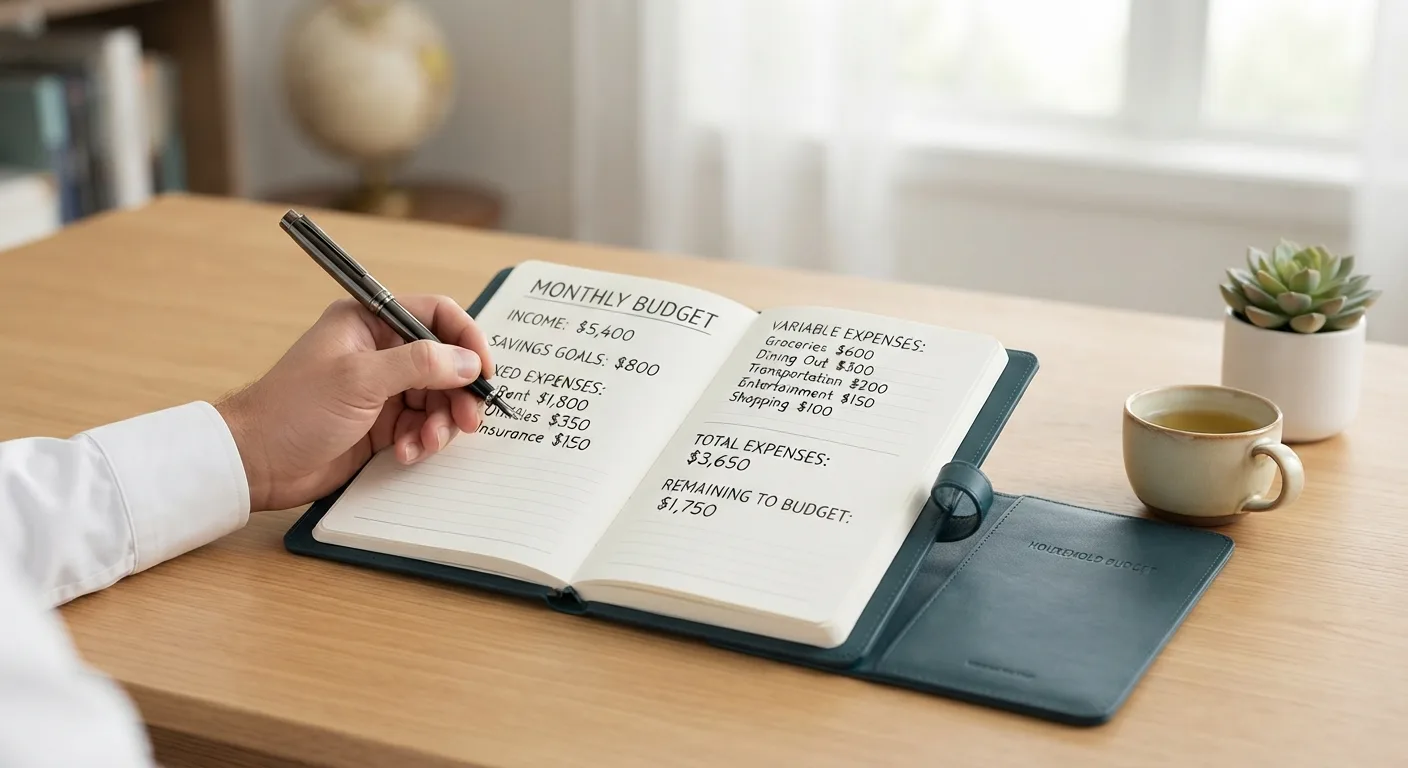
Using AI to make household budgeting as easy as snapping a photo
A simple way to track spending: take photos of receipts and let AI draft your budget totals, while you check the numbers.
How to use AI to speed up household budget checks
A practical guide to getting AI to help sort your expenses, spot review targets, and save money.
Cutting entertainment costs made the biggest difference to my savings
A man who struggled to save on a 250,000 yen salary found the answer wasn’t skipping meals, but slashing entertainment spending fi...